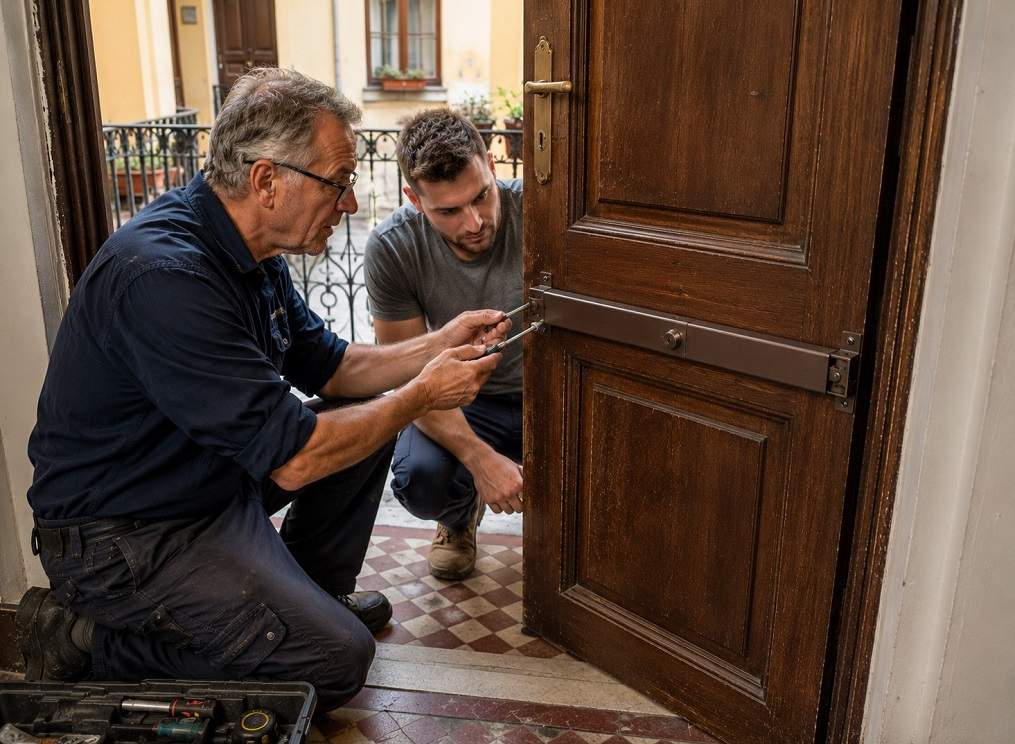
Good home security does not necessarily mean installing an expensive security system or replacing every door and window.
For both houses and apartments, the best place to start is with the obvious ways somebody could enter and work from there.
Start With the Doors and Windows
Check the entrance door, frame and locks, together with any ground-floor or otherwise accessible windows, terraces and balcony doors.
One cost-effective way to improve the security of the main entrance door is a hevederzár. This is a reinforced cross-bar lock that can be fitted to some existing doors.
“When we inspect an older apartment, we don't automatically recommend replacing the entrance door. A properly fitted hevederzár with a good-quality cylinder can be a cost-effective alternative, provided the existing door and frame are strong enough to support it,” says Alex Markus, Chief Executive, City-Lets Ltd.
Change the Locks When Occupants Change
When buying a previously occupied property, you may not know how many copies of the keys are still in circulation.
The same issue applies to rental properties whenever occupants change and not all copies of the keys can be accounted for.
“If you cannot account for all the keys when a tenant moves out, change or re-key the relevant locks before the next tenant moves in. It is a relatively simple job and removes an unnecessary risk,” Markus said.
Do not hide spare keys under doormats, plant pots or in other obvious places close to the entrance.
Install Motion-Sensor Lighting
For a house, install motion-activated lights around entrance doors, driveways, side passages, external stairs and rear access points. Position them so that somebody approaching the property is illuminated.
For apartments, sensor lighting may also be useful around private terraces or other accessible areas. Changes to condominium common areas should first be agreed with the building where required.
If new wiring is needed, use a qualified electrician.
Consider an Alarm or Security Cameras
An audible alarm can act as an additional deterrent and draw attention to an unauthorised entry, while cameras can record activity around entrances and other vulnerable areas.
Modern systems can send alerts and provide camera access through a smartphone. Wireless and portable systems may suit rental properties because some can be installed without substantial alterations and moved later.
For apartments, cameras should be positioned and used with appropriate regard to privacy and condominium rules, particularly if they capture common areas.
Control Who Has Access
Check that the building's main entrance closes and locks correctly and that the intercom works. Do not automatically allow unknown visitors into the building.
For houses with garages or gates, keep remote controls and spare keys out of sight, particularly inside vehicles. Get to know your immediate neighbours. They are more likely to notice unusual activity around your property.
Check Your Insurance
Owners should check what their building and contents insurance actually covers, including any valuable items kept at the property. Tenants should not assume that the owner's insurance covers their personal belongings and may want to arrange their own contents insurance.
The aim is not to turn a home into a fortress. Secure the easiest access points first, then add lighting, alarms or cameras where they provide a practical benefit.