Alex Markus, Chief Executive, City-Lets Ltd.
The Hungarian government could spend around HUF 1,000 billion on housing-related measures in 2026, according to an analysis published by Telex.
That is an enormous amount of money. So what will it actually change?
The HUF 1 trillion is not destined for a single programme for building or renovating homes. It covers different forms of housing support, including Otthon Start, Babaváró, CSOK Plusz and home-renovation loans.
Otthon Start alone could eventually cost close to HUF 200 billion a year as the amount of subsidised lending accumulates, even if interest rates fall quickly. The analysis puts the potential annual cost as high as HUF 400 billion. Public-service housing support could also exceed HUF 150 billion in 2026.
To me, this is an important distinction. Housing spending can support the housing market without necessarily improving the housing stock.
Government housing programmes have concentrated heavily on helping households buy property. That is perhaps not surprising when around 86% of Hungary's housing stock is owner-occupied.
But who is actually benefiting?
According to MNB data, 59% of Otthon Start lending went to the highest-earning 10% of borrowers. ELTINGA's calculation found that the higher-income half received 93% of lending, while the lower-income half received just 7%.
Otthon Start can make buying a home more affordable for borrowers who qualify for the subsidised loan.
But a subsidised mortgage still requires sufficient income to qualify for the loan and enough money for a deposit.
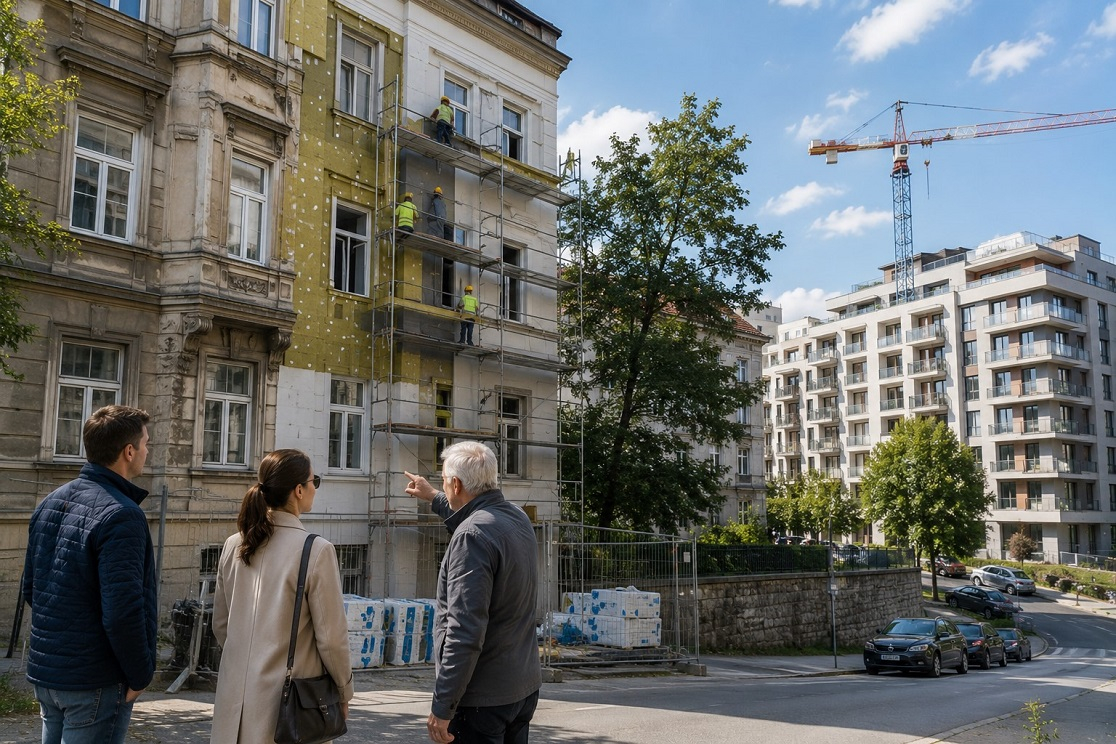
An estimated 600,000–700,000 Hungarian families live in overcrowded homes or properties with inadequate facilities, poor insulation or outdated windows.
Around 2.5 million homes are estimated to require energy modernisation.
So how much of the government's housing spending is actually improving the homes people live in?
Some of the programmes do support renovation. Home-renovation loans are included among the interest-subsidised schemes, while rural home-renovation support is also part of the government's housing measures.
But with around 2.5 million homes requiring energy modernisation, I think improving the existing housing stock deserves to be a much bigger part of the discussion.
What About Supply?
Improving existing homes is only part of the picture. The number of new homes matters too.
The VAT treatment of new homes has changed repeatedly over the past decade. The current preferential VAT rate on qualifying new homes is 5%, compared with the standard 27% rate.
The process for approving construction has also changed significantly, including the transfer of approvals from local municipalities to government offices. Some priority and brownfield developments have also depended on individual decisions instead of consistent rules.
For developers, that matters.
Property development is a long-term business. Developers can commit substantial amounts of capital years before an apartment is completed and sold.
Developers can work with strict rules. What is much harder is committing capital to a multi-year project without knowing whether those rules will remain the same.
Creating more homes does not always require another empty building plot either.
Brownfield development, additional floors, loft conversions and finding new residential uses for suitable existing buildings are all ways more homes could be created within Budapest.
I think these options could become increasingly important.
The government could spend around HUF 1 trillion on housing-related measures this year. The key question is not simply how much is being spent. It is what the money changes.
Helping households finance a purchase clearly has a role to play. But I think the next part of the housing debate needs to be about the homes themselves.
Hungary has to address the quality of its existing homes and dramatically increase the supply of new ones. That means renovation, new development and making better use of suitable buildings and land already available within Budapest.
For me, the real test is what HUF 1 trillion of housing spending ultimately achieves.