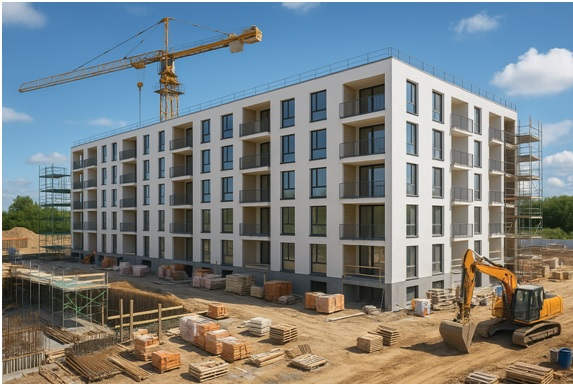
If you’ve been scrolling property listings lately, you’ve probably felt it: there just aren’t enough good homes on the market, and the ones that are available feel pricier every month. In Hungary, the number of newly built homes has dropped sharply in recent years, even as prices and rents continue to climb.
The core problem: too few new homes, too much pressure
According to the Central Statistical Office (KSH), only 13,295 new homes were completed in 2024, which is 29% fewer than a year earlier. At the same time, building permits and simple notifications covered 20,494 planned homes, also below the previous year’s level.
Industry experts have long said the country would need roughly 20,000–25,000 new homes a year just to keep the market in balance and replace the ageing housing stock. With completions stuck well below that level, the result is:
- Fewer modern, energy-efficient homes to choose from
- Strong competition for quality new builds
- Persistent upward pressure on prices
KSH housing price data shows that the overall price level in 2023 was 7.1% higher than 2022, with new homes 15% more expensive and used homes up 6%. In 2024, prices kept moving: KSH’s latest summary indicates around 13% annual price growth in the housing market.
In plain language: fewer new homes plus steady demand equals tougher conditions for buyers and renters.
Enter the Lakhatási Tőkeprogram: what is it?
To ease the supply shortage, a new Housing Capital Program has been launched with a strong role for the state development bank (Magyar Fejlesztési Bank, MFB) and private fund managers.
Key points from the announced framework:
- The program mobilises around 200–300 billion forints of equity-type capital into residential projects.
- Thanks to financial leverage, this can support up to about 1,000–2,000 billion forints of development volume over several years.
- The official goal is at least 30,000 new homes, including rental blocks, condominiums and student housing, in roughly five to six years.
An important detail is that the program does not work as a simple grant. Instead, it operates through investment funds and loans, sharing risk with private developers. That means projects still need to be commercially viable, but financing hurdles, especially for mid-sized developments, can be significantly lower than before.
Will 30,000 homes really change anything?
Let’s put the number in context.
If 13,295 homes were completed in 2024, and the healthy level is around 20,000–25,000 per year, then an extra 30,000 homes over several years is not a magic fix, but it is a serious push in the right direction.
Think of it like this:
- Without the program, supply would likely stay weak, and prices would continue to rise faster than incomes in many areas.
- With the program, the gap between needed and actual new homes could narrow, especially in larger cities and growing regional centres.
- More competition between new projects can gradually cool price growth, even if it does not make homes outright cheap.
KSH’s latest housing price indices already show that the pace of increase has slowed compared to the boom years, even though prices are still rising. A significant new pipeline of homes can reinforce that trend, leading to slower climbing prices rather than dramatic falls.
What this could mean if you’re buying
For an owner-occupier or first-home buyer, the new supply wave connects with other policy tools, like subsidised housing loans and family-support schemes. While the details of programs such as CSOK Plusz and new low-rate Otthon Start mortgages can change over time, the direction is clear:
- Cheaper financing for families and first-time buyers via capped interest rates.
- More new projects to choose from, instead of chasing a handful of popular developments.
- A better chance to find energy-efficient, modern homes that keep utility bills more predictable in the long term.
However, timelines matter. Many of the homes financed by the Housing Capital Program will only be completed from 2026 onwards, according to statements from program leaders and early project announcements.
So if you are house-hunting right now, it is worth asking yourself:
- Do you want to buy an existing home sooner, accepting current prices and limited choice?
- Or are you able to wait a couple of years for more new-build options to hit the market?
There is no universal right answer. It depends on your family situation, job stability, and how tight your current rental or housing setup feels.
And if you’re renting?
Rents have also been on the move. KSH’s rental index shows offer rents were about 9–10% higher year-on-year in early 2025, with monthly increases still visible both nationwide and in the capital.
On top of that, local initiatives such as new municipal housing agencies and affordable rental programs in Budapest aim to increase the stock of regulated or discounted rental homes by involving both public and private landlords.
Combined with the Housing Capital Program, renters can expect:
- More professional rental projects, including buildings designed to be rented out long-term.
- A gradual increase in choice in well-connected urban areas.
- Potentially more stable, predictable rents in parts of the market where supply grows fastest.
Again, the effect will not be overnight, but if you plan to rent for several more years, keeping an eye on new rental-focused developments could pay off.
What savvy buyers and investors can do now
You do not need to be a market analyst to use this information. A few practical steps can already help you position yourself smartly.
1. Follow new-build announcements. Watch for projects explicitly linked to the Housing Capital Program or other state–market initiatives, as these can offer modern design, better energy performance and sometimes more transparent pricing.
2. Compare new builds versus used homes carefully. KSH data shows new homes have become much more expensive relative to older stock since 2015, with their prices more than doubling over that period. Weigh the premium for a new, efficient building against renovation and energy costs in an older one.
3. Stress-test your budget. Even with support schemes, monthly repayments and running costs must fit comfortably into your income. Use conservative estimates for interest rates and maintenance.
4. Think long-term liveability. Beyond price per square metre, look at transport links, local schools, green space and future infrastructure. New programs tend to favour developments in well-connected areas, which can be an advantage if you plan to stay put.
5. Stay flexible on timing. If your current living situation is acceptable, you might benefit from waiting until more of the 30,000 planned homes actually reach the market. If it is not, a solid, slightly more expensive home now can still be better than years of uncertainty.
5 quick Q&As: the new housing push in a nutshell
1. Why is there a housing shortage?
Because completions, at 13,295 new homes in 2024, are well below the 20,000–25,000 units experts say are needed annually, while demand for modern homes remains strong.
2. What is the Housing Capital Program?
It is a large state–market investment scheme using roughly 200–300 billion forints of capital to finance up to 30,000 new homes over five to six years through professional fund managers and banks.
3. Will this make homes cheaper?
It is more realistic to expect slower price growth rather than big price drops. More supply and competition can cool the pace of increases, especially in larger cities.
4. When will I see these new homes on the market?
The first projects linked to the program are already being marketed, but the bulk of completions are expected from 2026 onward as larger developments finish construction.
5. What should I do now as a buyer or renter?
Clarify your time horizon, track new-build announcements, and compare the total cost of buying now versus waiting. For renters, watch for new professional rental projects and municipal schemes that can expand affordable options.