
A Practical Guide for Landlords and Property Investors
Introduction: A Key Decision for Budapest Landlords
For many property owners, deciding to rent out an apartment in Budapest is only the first step in the investment journey. An equally important decision follows soon after: should the landlord manage the property personally, or appoint a professional property manager? At first glance, the difference between these two approaches appears straightforward. Self-managing a rental property allows the owner to remain directly involved in the tenancy, while professional property management delegates these responsibilities to a specialist company.
In practice, however, the decision is more nuanced. Managing rental property involves a range of operational tasks that extend far beyond collecting rent. Landlords must organise marketing, communicate with tenants, coordinate maintenance, maintain documentation, and ensure the tenancy operates smoothly throughout the lease period.
For some landlords particularly those living locally and comfortable handling operational responsibilities self-management can work well. For others,professional property management provides structure, efficiency, and peace of mind.
Understanding how property management in Budapest works helps landlords evaluate both options and decide which approach best aligns with their investment strategy.
What Self-Managing a Rental Property Means
Self-managing a rental property means the landlord personally oversees every aspect of the tenancy.
Rather than working with a Budapest property manager, the owner handles tenant communication, property marketing, maintenance coordination, and administrative responsibilities directly.
In Hungary, many landlords manage their rental properties themselves, particularly when they own a single apartment or live close to the property. This approach allows owners to maintain full control over decisions related to tenant selection, rental pricing, and property upkeep.
However, self-managing also means the landlord becomes responsible for the entire operational process of letting property in Budapest, from the first tenant enquiry through the duration of the lease.
Successful self-management therefore requires organisation, responsiveness, and an understanding of the local rental environment.
Responsibilities Landlords Must Handle Themselves
When landlords choose to manage their own rental property, they assume responsibility for a wide range of tasks that ensure the tenancy operates smoothly. These responsibilities typically fall into several key categories.
Tenant Communication and Marketing
One of the first responsibilities when renting out an apartment is attracting suitable tenants.
Landlords who self manage rental property in Budapest must handle the marketing process themselves. This usually involves creating rental listings, responding to enquiries, organising property viewings, and communicating the conditions of the tenancy.
Because many tenants searching for apartments in Budapest are international professionals or students, communication often takes place in English and requires prompt responses.
Organising viewings and managing tenant enquiries can require considerable time, particularly when multiple applicants are interested in the apartment.
Tenant Screening and Selection
Selecting the right tenant is one of the most important responsibilities in property management.
Careful tenant screening helps protect both rental income and the condition of the property. Landlords typically review identification documents, verify employment or income sources, and assess overall financial stability before approving an applicant.
Reliable tenants often remain in the property longer and contribute to a more stable rental experience.
For landlords managing their own property, maintaining a structured screening process is an important step in reducing risk.
Maintenance Coordination
Maintenance is an inevitable part of owning rental property.
Self-managing landlords must organise repairs, communicate with contractors, and ensure maintenance work is completed properly. Tasks may include arranging plumbing repairs, appliance servicing, or general upkeep of the apartment.
Many residential buildings in Budapest were constructed decades ago and occasionally require technical maintenance or coordination with building management.
Responding quickly to maintenance issues helps preserve the condition of the property while maintaining positive relationships with tenants.
Legal and Administrative Responsibilities
Renting out property also involves several administrative responsibilities.
Landlords typically prepare lease agreements, define rental conditions, and maintain documentation related to the tenancy. Clear agreements help ensure both landlord and tenant understand their rights and responsibilities.
In some cases, lease agreements may be notarised to provide additional legal clarity and enforcement options.
Maintaining proper documentation and organised records helps prevent misunderstandings and supports a professional rental process.
Rent Collection and Financial Administration
Another important aspect of self-managing rental property involves managing financial records.
Most rental agreements in Budapest require tenants to pay rent monthly in advance by bank transfer. Landlords must monitor payments, maintain records of rent received, and document expenses such as maintenance or repairs.
Clear financial tracking allows landlords to understand the performance of their property and maintain transparency throughout the tenancy.
Advantages of Self-Managing a Rental Property
Despite the responsibilities involved, many landlords still prefer to manage their properties independently.
Several factors explain why this approach remains common.
Lower operating costs
The most obvious advantage is avoiding management fees. When landlords manage the property themselves, the full rental income remains with the owner.
Direct tenant relationships
Some landlords prefer communicating directly with tenants rather than working through an intermediary. This direct relationship can sometimes make communication more straightforward.
Full operational control
Self-management allows owners to make immediate decisions about pricing, maintenance, and tenant selection without relying on third parties.
For landlords who enjoy being involved in the day-to-day operation of their investment, these advantages can make self-management appealing.
Time Commitment and Operational Challenges
While self-managing a rental property provides control, it also requires consistent time and attention.
Tenant communication, maintenance requests, and administrative tasks can accumulate quickly, particularly during tenant transitions or when unexpected issues arise.
Examples of operational challenges include:
- urgent repair requests
- scheduling maintenance contractors
- handling tenant disputes
- re-advertising the property when tenants move out
For landlords managing several properties, the administrative workload can increase significantly.
These factors often lead some investors to consider professional management as their portfolio grows.
What a Professional Property Manager Does
A Budapest property manager oversees the rental property on behalf of the owner.
Instead of the landlord managing day-to-day operations, the property manager becomes the central coordinator between tenants, contractors, and the property owner. The role of the manager is to ensure the tenancy runs smoothly while maintaining the condition of the apartment.
This includes handling operational tasks such as marketing the property, organising viewings, screening tenants, preparing lease agreements, coordinating maintenance, and managing rent collection. For landlords seeking a more hands-off investment approach, professional property management allows the property to operate with less daily involvement from the owner.
Typical Services Property Managers Provide
Professional property management services usually cover the full lifecycle of a rental property.
Common services include:
- Marketing and tenant placement
- Property managers advertise the apartment, organise viewings, and communicate with prospective tenants.
- Tenant screening: Managers often follow structured screening procedures designed to evaluate applicant reliability and financial stability.
- Lease preparation: Rental contracts are prepared and documented according to standard practices.
- Rent monitoring: Managers track rent payments and maintain financial records related to the tenancy.
- Maintenance coordination: Repairs and maintenance are organised through established contractor networks.
- Property oversight: Periodic inspections help ensure the property remains in good condition throughout the lease.
These services allow landlords to maintain rental property without personally managing operational details.
When Self-Management Works Best
Self-managing a rental property can be an effective approach in several situations.
This option often works best when:
- the landlord lives locally in Budapest
- the owner has time to manage tenant communication
- the property requires relatively little maintenance
- the landlord prefers direct involvement in management decisions
In these circumstances, managing the property personally can provide both cost savings and direct oversight.
When Professional Management Is Beneficial
Professional property management in Budapest often becomes more attractive under different circumstances.
Landlords frequently choose professional management when:
- the owner lives outside Hungary
- the landlord manages multiple properties
- time availability is limited
- maintenance coordination becomes difficult to organise
Professional management can simplify ownership by centralising operational responsibilities and providing consistent oversight.
Management for Overseas Landlords
Budapest has become an increasingly popular location for international property investors.
Many owners live outside Hungary and rely on local representatives to oversee their apartments.
Managing tenants remotely can be challenging without a trusted local contact who can coordinate maintenance, monitor property condition, and communicate with tenants.
For overseas landlords, working with a local property manager often provides practical operational support and ensures that the property remains professionally managed even when the owner is not physically present.
Cost Considerations
Cost is one of the most important factors when deciding between self-management and professional management.
Property managers typically charge a monthly management fee calculated as a percentage of the rental income. This fee usually covers the operational responsibilities associated with managing the tenancy.
Additional charges may apply when new tenants are placed or when maintenance coordination requires administrative oversight.
While these costs reduce the landlord’s net rental income, they also replace the time and effort required to manage the property independently.
For many investors, the decision ultimately becomes a balance between financial cost and operational convenience.
Practical Comparison Between the Two Approaches
Both management styles can work successfully depending on the landlord’s circumstances.
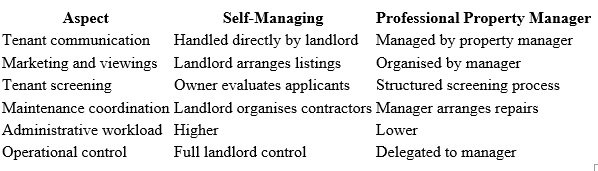
Understanding these differences helps landlords evaluate which approach better suits their time availability and investment goals.
FAQ for Budapest Landlords
Can landlords manage rental properties themselves in Budapest?
Yes. Many property owners manage their apartments independently, particularly when they live locally or own a single rental property.
What does a property manager typically do?
A property manager oversees tenant sourcing, lease preparation, rent monitoring, maintenance coordination, and tenant communication.
Is professional property management necessary for one apartment?
Not necessarily. Some landlords successfully manage a single property themselves, while others prefer professional management to simplify administration.
Why do overseas landlords often use property managers?
Owners living abroad often rely on local managers to coordinate tenants, repairs, and administrative responsibilities.
Does professional management reduce landlord involvement?
Yes. Professional property management allows the landlord to delegate day-to-day operational responsibilities while maintaining ownership of the property.
Conclusion: Choosing the Right Approach for Your Property
The decision between self-managing a rental property in Budapest and working with a professional property manager ultimately depends on how involved a landlord wishes to be in the daily operation of the property.
Self-management can work well for owners who live locally, have time to manage tenants, and prefer direct control over their investment.
Professional property management, by contrast, provides operational support, structured processes, and reduced day-to-day involvement for the landlord.
Both approaches exist successfully within Budapest’s rental market. The most appropriate choice depends on the owner’s circumstances, experience, and long-term investment strategy.
Regardless of the approach chosen, consistent management, responsible tenant selection, and proactive maintenance remain the foundations of a successful rental property investment.