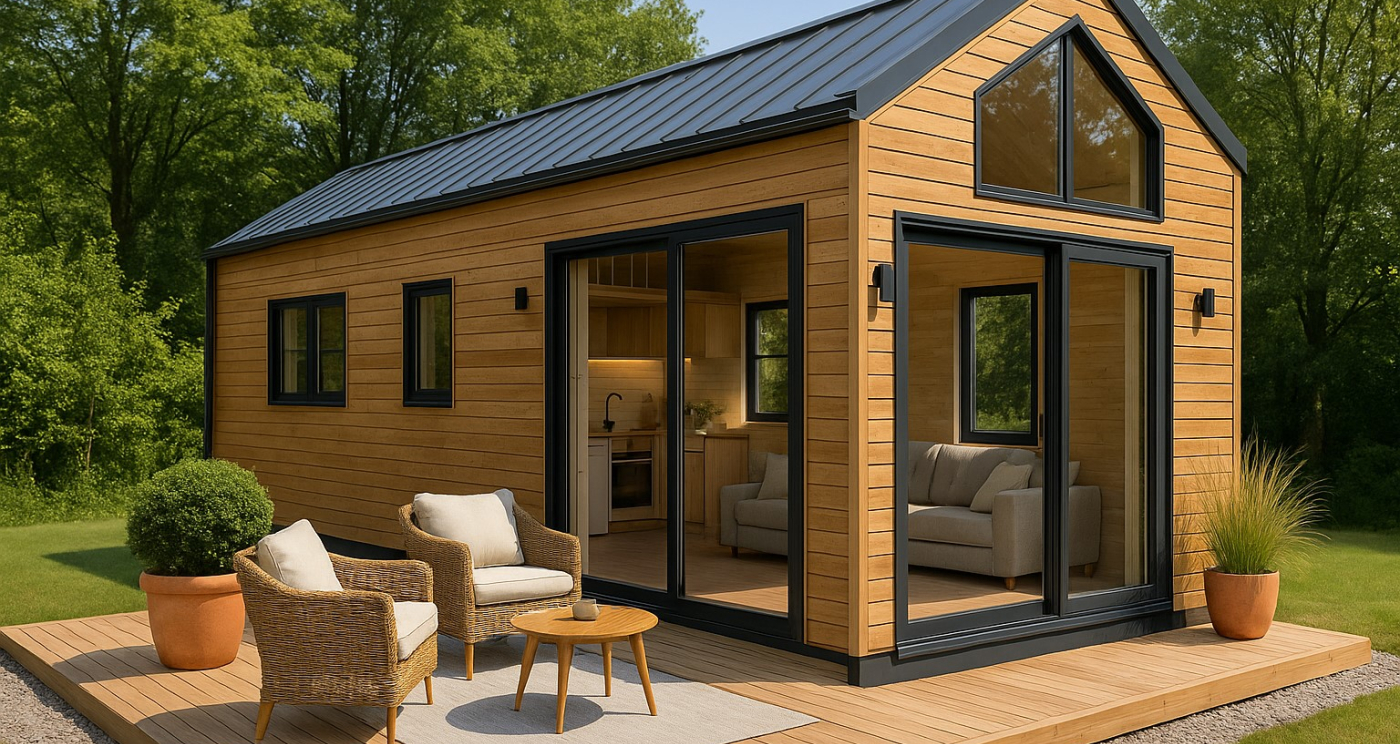
Tiny homes have become one of the most talked-about housing alternatives of the past decade. The idea is simple: build small, live simply, spend less. But does the tiny-home dream actually translate into meaningful savings when compared to building a conventional house with land?
Let’s unpack what we now know, including the reality that tiny-home cost data here is surprisingly fragmented and see whether going tiny is really worth it.
What Counts as a Tiny Home?
When people say “tiny home,” they usually mean a compact, self-contained dwelling of about 20–40 m², often built on a trailer or a small foundation. It’s designed to include all essentials in a minimal footprint kitchen, bathroom, sleeping space, and storage solutions that fold, slide or vanish when not in use.
Unlike small city flats, these homes are standalone units. This independence is a big part of the appeal: your own walls, your own structure, your own four tiny corners.
Why Tiny Homes Are Attracting Interest
1. Housing and construction costs are rising
Building costs have climbed sharply, and while a widely cited national average construction cost of around 617,000 HUF per m² has been reported, this reflects standard homes, not tiny houses. It also doesn’t include land, permit fees, or high-quality finishes. Many real-world builds cost much more once everything is counted in.
This cost pressure naturally pushes some people to explore smaller, cheaper options.
2. Lower running costs
A tiny home costs less to heat, cool, clean and maintain. Because the footprint is small, utility usage is modest, and maintenance tasks are minimal. For singles or couples who live lightly, this alone can feel like a huge lifestyle upgrade.
3. A simpler way of living
Tiny living encourages intentional choices. With limited space, you keep what you value, reduce waste, and avoid clutter by necessity. For many, it’s a refreshing reset.
What Tiny Homes Actually Cost: The Reality
Here’s where things get interesting: there is no reliable, standardised tiny-home cost database locally. Unlike the conventional housing market, tiny homes are niche. Builders are small companies, offerings vary widely, and very few provide full cost breakdowns. Prices also depend heavily on whether the home is mobile or fixed, what materials are used, and how much insulation and utility infrastructure is included.
Based on what is publicly available today, here’s a realistic overview:
- Budget Tiny Home (≈ 25–30 m²)
15–22 million HUF. Lightweight construction, basic insulation, simple kitchen and bath, minimal utility connections. Works for seasonal or minimalist living. - Mid-Range Tiny Home (≈ 35–45 m²)
25–35 million HUF. Quality insulation, decent windows, a comfortable bathroom, proper kitchen, basic utilities, and a more solid structure. Suitable for year-round living. - Comfort Tiny Home (≈ 45–55 m²)
35–50+ million HUF. High-quality doors and windows, strong insulation for harsh winters, efficient heating and cooling, smart layout, good interior finishes. The closest tiny homes get to regular house comfort.
These ranges are based on verified listings, vendor data, and cross-checked international benchmarks but they should be treated as guidelines, not absolute truths, because local market data is still scattered.
How Tiny Homes Compare to Building a Traditional House
To understand value, let’s compare tiny-home living to building a conventional detached home with land.
A standard newly built home (say 90–120 nm) typically involves:
- Construction cost: Much higher overall due to size, materials, foundation work, utilities, and labour.
- Land purchase: Varies wildly by region, but often costs as much or more than the house itself.
- Permits and compliance: More predictable than tiny homes, because the system is built around conventional houses.
- Comfort: A regular home offers space for family, pets, guests, storage, hobbies and work.
- Long-term value: Conventional homes hold their value more reliably and appeal to a wider market.
Even at the reported 617,000 HUF per nm baseline for standard construction, a 100 nm house already sits at approximately 61–70 million HUF, and that’s before adding land, landscaping, utilities, driveway, fencing and interior fit-out. Final costs often reach 80–120+ million HUF depending on location and specifications.
Against this backdrop, a 25–50 million HUF tiny home certainly looks more budget-friendly, but only if the lifestyle fits.
Tiny Homes: Who They Work For and Who They Don’t
Tiny homes are a great match for:
- Singles or couples without children
- Minimalists with few possessions
- People wanting affordable independent living
- Those comfortable with multifunctional spaces
- Buyers prioritising low upkeep and low bills
Tiny homes are not ideal if you:
- Need space for family, pets or hobbies
- Want a home office or guest room
- Collect things or require lots of storage
- Expect strong resale value or rental appeal
- Want long-term flexibility to expand or remodel
Final Word
Tiny homes can absolutely deliver real savings especially compared to the cost of building a conventional house with land. But they are not a shortcut to cheap, spacious living. They’re a lifestyle choice: fewer square metres in exchange for lower costs, less clutter, and a simpler pace of life.
If that trade-off feels right, a tiny home might be the perfect fit. If not, a traditional home may still be the more practical long-term choice.